

Can I Draw After Every Turn Yu-gi-oh
Attending, duelists! You may remember the Yu-Gi-Oh! Trading Carte du jour Game from the Before Days of 2002, but if you're reading this guide, you lot're probably wondering: what ever happened to that old game? Surprisingly, it's only gotten more popular, then there'due south no better time to larn how to play the Yu-Gi-Oh! TCG for beginners and returning fans alike.
How to play Yu-Gi-Oh! TCG
- How to play Yu-Gi-Oh! TCG
- How do yous attack in Yu-Gi-Oh! TCG
- How many cards are in a Yu-Gi-Oh! deck
- Yu-Gi-Oh! TCG card types
- Yu-Gi-Oh! TCG field layout
- What does Concatenation hateful in Yu-Gi-Oh?
Tournament attendance records are cleaved every yr and, because publisher Konami continually releases both back up for the decks of yesteryear and all-new playstyles, it'south never been easier to build a Yu-Gi-Oh! deck you enjoy and discover people to play with.
Whether you're a total novice or a returning duelist who could utilise a refresher, this guide to learning how to play the Yu-Gi-Oh! TCG will get you up to speed with the basics of the trading card game.
How to play Yu-Gi-Oh! TCG
The Yu-Gi-Oh! TCG is played in turns that follow a specific order of operations. To begin a duel, the decks are shuffled and each player draws an opening paw of five cards. Here'south a breakup of the flow of a thespian turn.
Draw Stage: The first thing you lot practise every turn is depict a card. The i exception is the get-go turn of the role player who goes first, who doesn't draw anything.
Standby Phase: This is when some card effects activate, as indicated by the cards' text.
Main Phase 1: In this stage, you make most of your non-combat actions. These include the normal summon/prepare of ane monster (in face-upward assault position or face-down defence force position respectively), any special summons you are allowed, the activation/setting of spells and traps, and irresolute battle positions of your monsters, including flip-summoning facedown defending monsters into the face-upwards set on position.
Battle Phase: This is where the magic happens. Each monster in attack position gets to attack once. When yous attack, you compare your Atk value to the opponent'southward Atk or Def value, whichever is relevant. Boxing can go one of a few ways.
Main Phase 2: Just the same every bit Main Stage ane, preparing for your opponent's plow.
Stop Stage: This is when some carte effects activate, which you lot'll encounter in the cards' text. If yous accept more than 6 cards in your paw, discard until you have half-dozen.
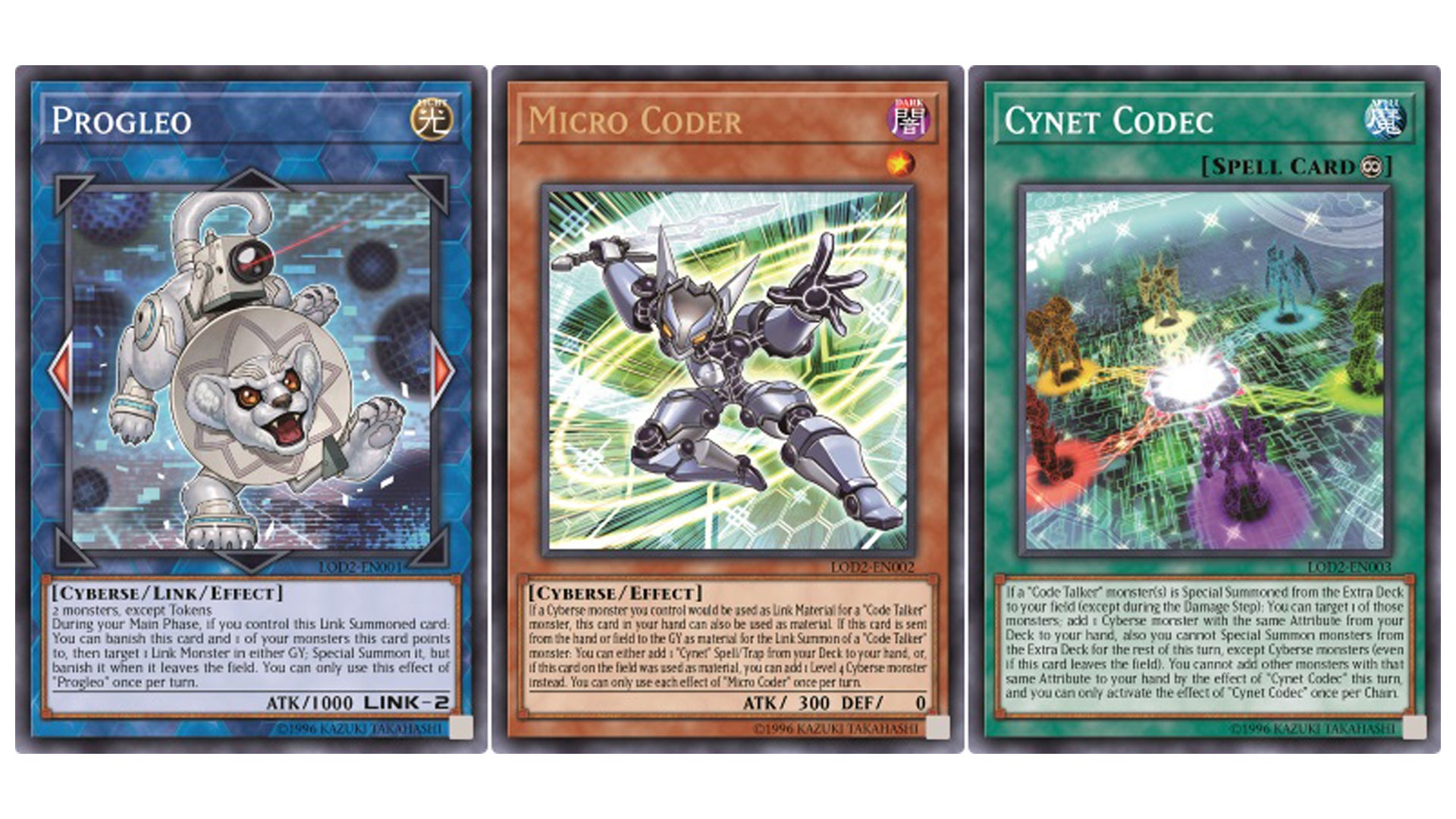
How do you assault in Yu-Gi-Oh! TCG?
Attacking a monster in attack position
- Yous attack a weaker monster in attack position: You destroy the monster and do harm directly to the opponent equal to the difference.
- You attack a monster of an equal strength in assault position: Both monsters are destroyed.
- You set on a stronger monster in set on position: Your monster is destroyed and you take damage equal to the difference.
Attacking a monster in defence force position
- You attack a weaker monster in defense force position: You destroy their monster.
- You lot attack a monster of an equal strength in defence position: Zip happens.
- You assail a stronger monster in defence position: You take damage equal to the difference.
If your opponent doesn't have any monsters, you lot bargain your monster's full Atk in impairment.
How many cards are in a Yu-Gi-Oh! deck?
You'll bring to the table a Principal Deck of 40 to 60 cards, and an Extra Deck of zero to fifteen special monsters. You'll know a monster belongs in the Actress Deck if information technology has "Fusion", "Synchro", "Xyz" or "Link" in bold on its card text.
In tournament play, where a circular is decided by a all-time-ii-out-of-iii, you can besides bring a separate Side Deck of up to fifteen cards to swap in between duels to adapt to your opponent'due south specific deck. You may have no more than than three copies of any card between these three decks.
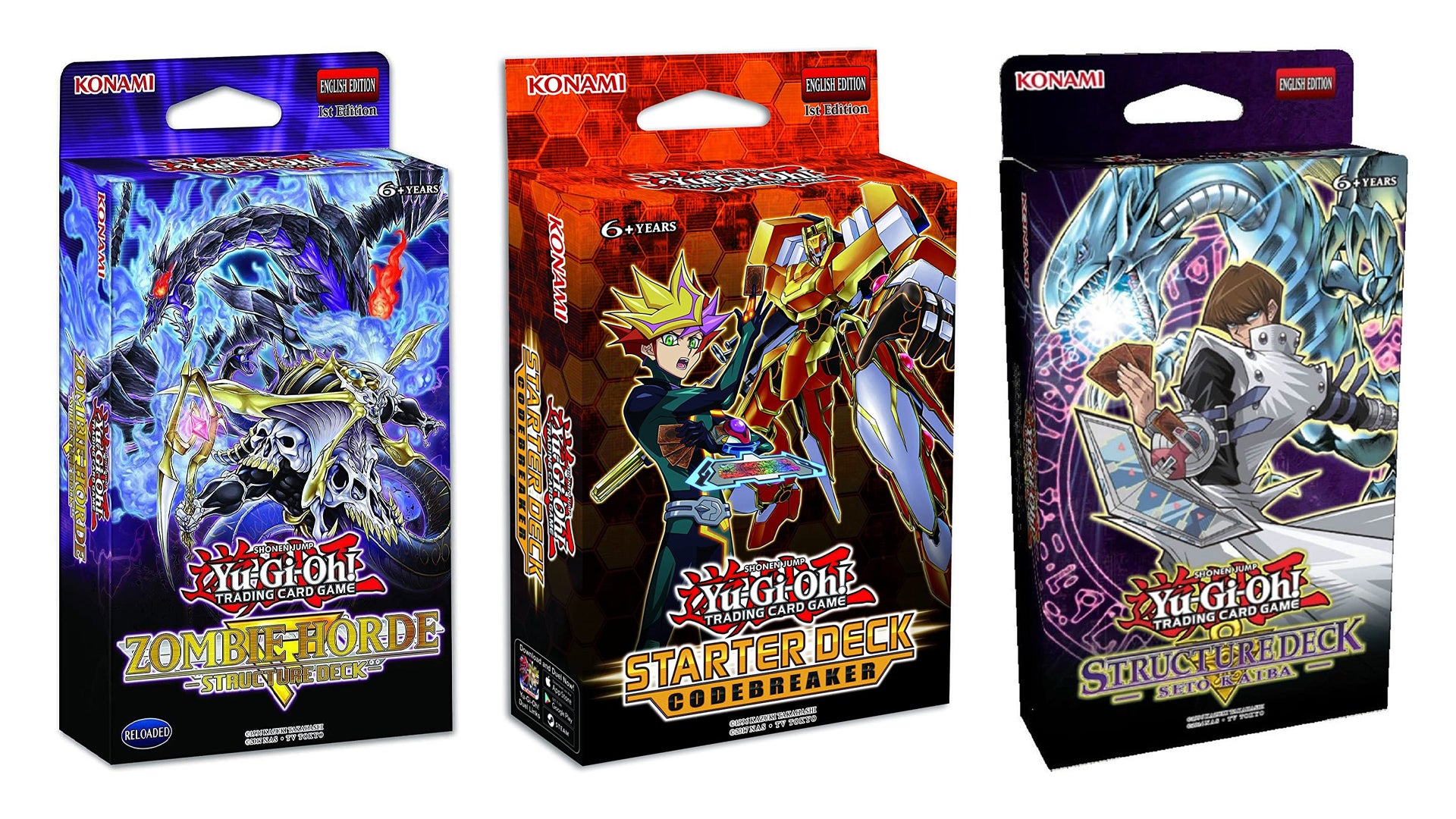
If edifice a deck from scratch sounds intimidating, yous can pick up a pre-built Structure Deck for under £10/$10. Once you have a sense for how the deck plays, consider experimenting by getting 2 more of the same ane. That way you can swap out the cards that weren't carrying their weight with extra copies of the ones yous wished you saw in your hand more often.
Yu-Gi-Oh! TCG carte du jour types
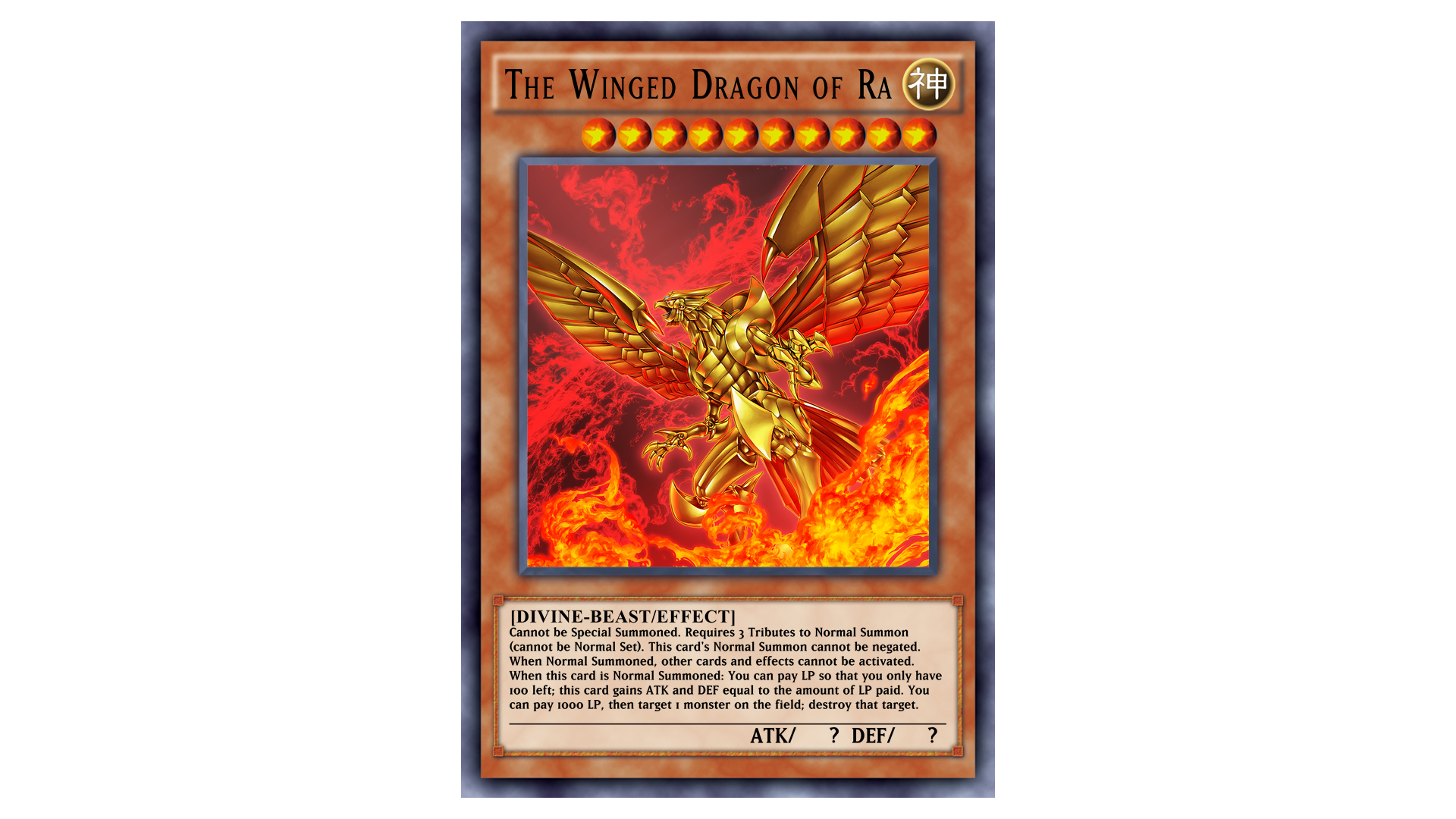
Now let'south look at some Yu-Gi-Oh! carte du jour types, kickoff with the stars of the show: monsters. There's a lot going on here, and then let the states walk you through the different parts of a Yu-Gi-Oh! monster card.
Monster cards
Name: Simple, simply the interactions of many cards that specify a card name necessitate a mention.
Level: This determines how difficult a monster is to summon. A Level 1 to 4 monster requires no Tribute to summon. A Tribute is where you choice a monster on your field to send to the Graveyard (in other words, discard) before summoning your bigger monster. A Level 5 or six monster requires i Tribute, and a Level 7 or higher monster requires 2 Tributes. That said, defer to whatever specific summoning conditions a bill of fare might mention.
Attribute: Every monster belongs to one of seven Attributes. These just matter when a card's text dictates.
Type: Every Yu-Gi-Oh! TCG monster belongs to one of twenty-five Types. Again, these only matter when a menu'due south text dictates.
Text: For Normal Monsters, this is flavour text. On Effect Monsters, it explains their furnishings or summoning conditions.
Atk: The relevant stat when the monster is in attack position (vertical), fifty-fifty if it is not the monster attacking.
Def: The relevant stat when the monster is in defence position (horizontal). You exercise not take damage from battles involving your Defence force Position monsters.
Spell cards
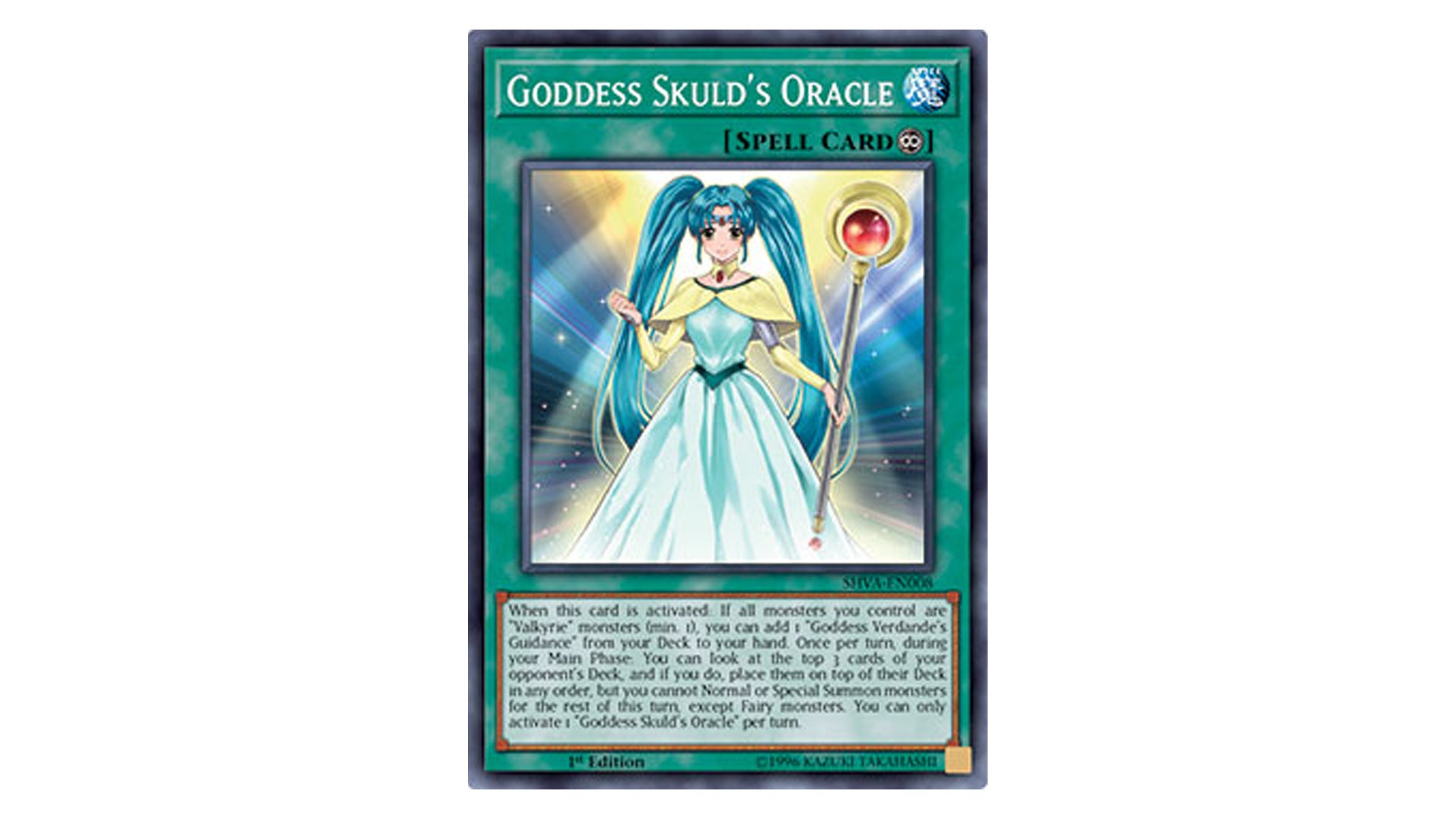
You lot won't just be summoning monsters; y'all'll also be supporting them with spells and traps. These cards are much simpler in design, but they come in a few subsets. Spells can be played confront-up and activated immediately or Set - played facedown to be activated on a after turn. In the case of Quick-Play Spells, they can be activated equally soon every bit your opponent'southward turn!
- Normal Spells have no icon.
- Equip Spells have a plus icon, and are played by targeting an appropriate monster.
- Continuous Spells accept an infinity icon, and remain on the field indefinitely.
- Quick-Play Spells accept a lightning icon. If you Fix them first, they can be activated on your opponent's turn.
- Field Spells have a compass rose icon, and remain in the Field Spell Zone indefinitely.
Trap cards
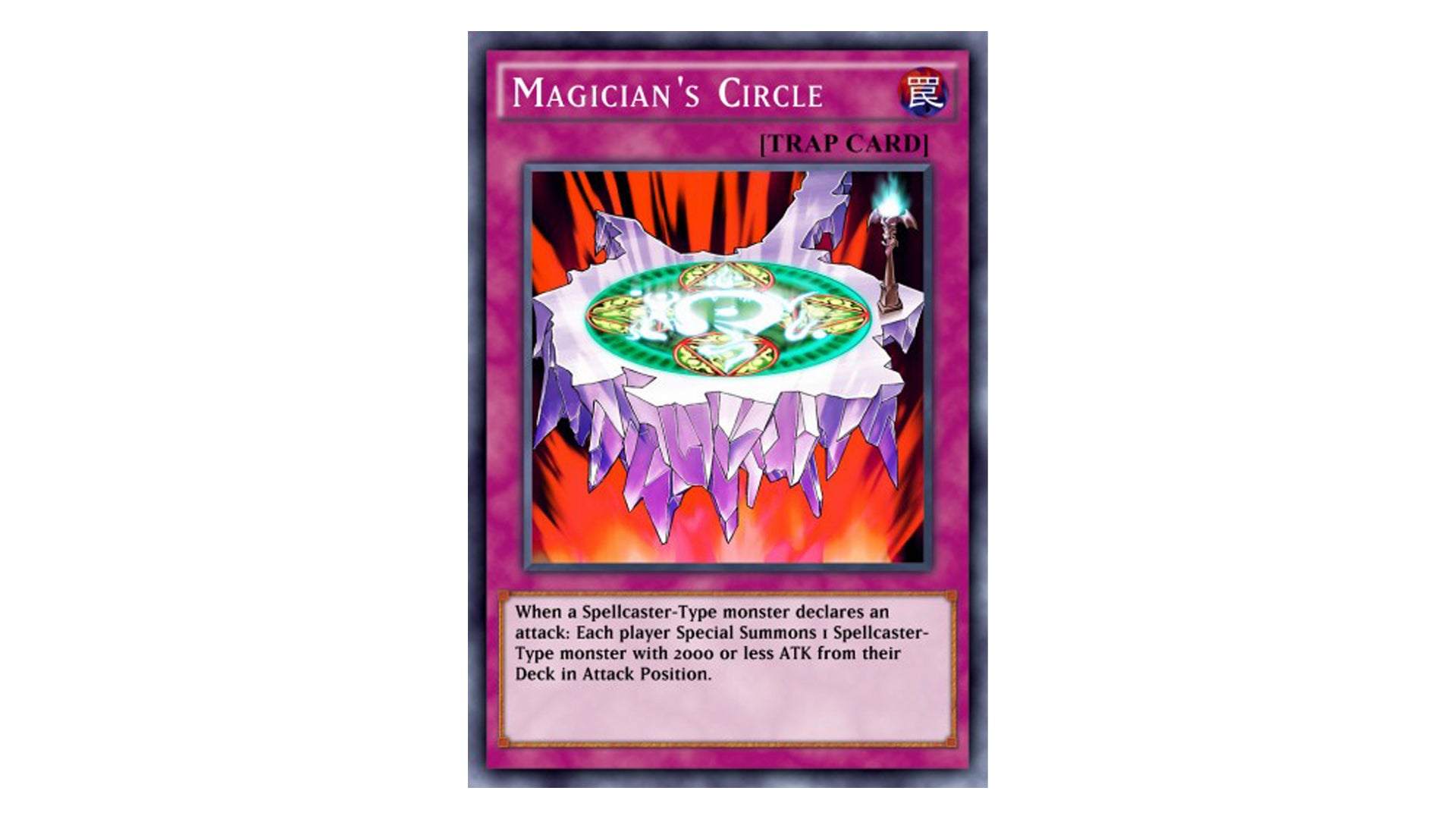
The concluding of the core card types is the trap. These get played facedown on your turn to activate on a later plow when their weather condition are satisfied.
- Normal Traps have no icon.
- Continuous Traps have an infinity icon, and remain on the field indefinitely.
- Counter Traps take an arrow icon, and are uniquely fast - but some other Counter Trap can be activated in response to them.
Yu-Gi-Oh! TCG field layout
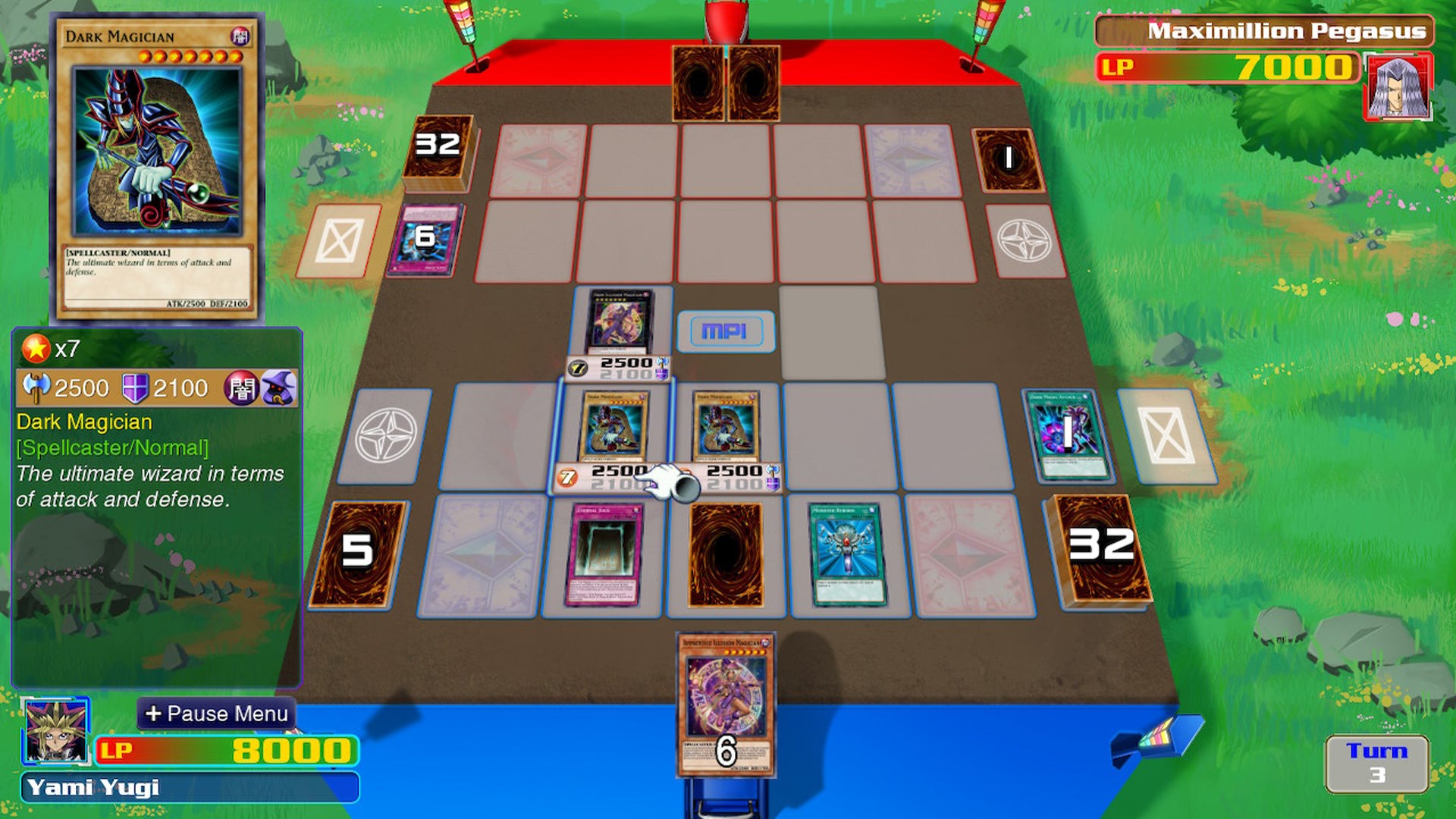
Now that y'all've seen the soldiers and support, let's bank check out the field of boxing. In the Yu-Gi-Oh! TCG, orderly card placement isn't just a matter of etiquette, it's part of the strategy, and then you may desire to play on a labeled play mat until you're used to it.
- The Deck Zone houses your Main Deck (your Side Deck is kept off the board until a duel ends). If your deck is depleted and you need to draw, you lot lose.
- The Graveyard (GY) is where cards are commonly sent when they leave the field. But death isn't always the cease! Some cards accept effects that tin can be activated in the Graveyard.
- The Extra Deck Zone houses your Actress Deck, its contents kept secret.
- The Field Zone is where you play Field Spells. Unlike other cards that remain on the field indefinitely, you tin play some other Field Spell past removing the one yous currently have out.
- Master Monster Zones are where yous'll be summoning or setting most monsters. Monsters can be played in the face-upward attack position or facedown defence force position.
- The Extra Monster Zones are only for Monsters summoned out of the Extra Deck, which you always have access to if you can meet their summoning requirements.
- Spell & Trap Zones are where you'll be activating or setting your spells and traps. The leftmost and rightmost spaces have a special interaction with Pendulum Monsters, which can human action equally Monsters or Spells.
In that location is no designated space for this, but cards can be "banished", which you can recall of as "double dead". Of course, life ever finds a way, and even banished cards might find their mode dorsum into play.
What does Chain mean in Yu-Gi-Oh?
Some cards in the Yu-Gi-Oh! TCG can be activated in response to something happening, and may even be responded to themselves with another menu. This event is called a Chain.
As the concatenation builds, menu effects do non resolve until both players agree they are done calculation to it, at which indicate each effect in the chain resolves in backwards order, so the concluding menu played is the first to resolve. Cards may just respond to another card if information technology has an equal or greater Spell Speed.
Spell Speeds are assigned every bit follows:
- Spell Speed 3: Counter Traps
- Spell Speed 2: Monsters with "Quick Effect" in their text. Quick-Play Spells, Not-Counter Traps
- Spell Speed 1: All other cards.
That should be plenty tutorial to get y'all started on your own journeying to condign a duelist and learning how to play the Yu-Gi-Oh! Trading Card Game. Once you're familiar with the basics, accept a look at the different Special Summoning styles that volition actually bring your deck to the next level and the best ways to start your collection.

Source: https://www.dicebreaker.com/games/yu-gi-oh-tcg/how-to/how-to-play-yu-gi-oh-tcg
Posted by: milleryoublituff.blogspot.com
0 Response to "Can I Draw After Every Turn Yu-gi-oh"
Post a Comment